

Why Being the Best Cook Doesn't Make You the Best Head Chef
- Carl Hatfield

- 5 hours ago
- 2 min read
Most chefs spend years learning how to cook.
Knife skills. Cooking techniques. Presentation. Timing. Speed.
Then, for many chefs, comes the opportunity to lead a kitchen.
Except nobody tells you that the job has just completely changed.
Over the years, I've come to realise that cooking is only one part of the job. In fact, as your career progresses, it often becomes less and less of the defining factor in your success. Restaurant owners advertise for a Head Chef, but what they often really need is a manager who happens to have started out as a chef.
That doesn't mean your passion for food should disappear. Quite the opposite. Every great chef should continue learning, improving and taking pride in the food they produce. But if you want to build a long-term career in hospitality, cooking alone will only take you so far.
Leadership, communication, food costing, labour management, menu development, restaurant systems, kitchen organisation, and commercial decision-making become just as important as the food leaving the pass.
The most successful Head Chefs understand that great hospitality is built on both exceptional food and exceptional operations.
One of the biggest changes when you become a Head Chef is that you're no longer just responsible for producing good food. You're now responsible for making decisions that affect the entire business.
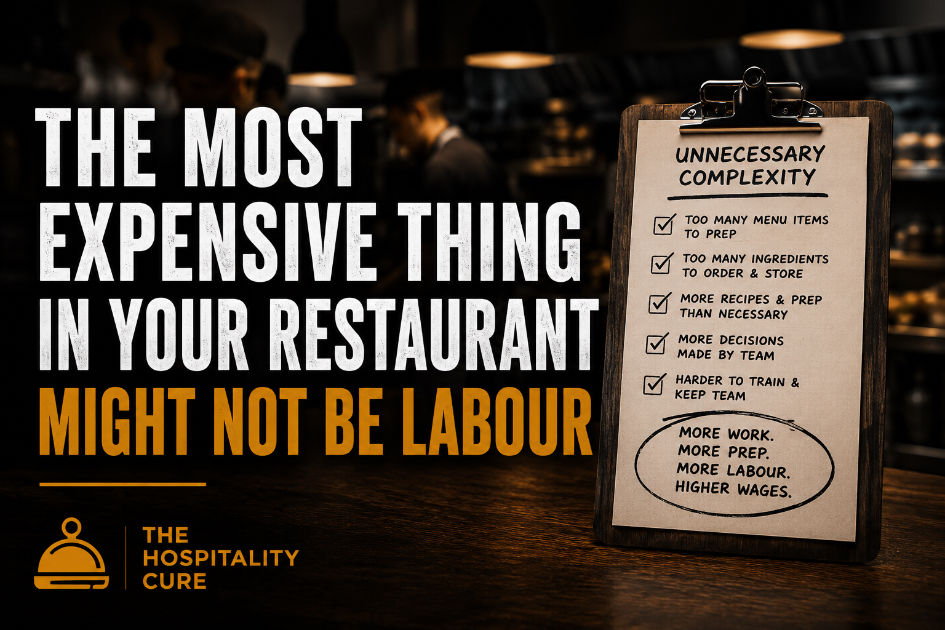
That doesn't mean thinking like an accountant. It means understanding that every purchasing decision, every portion, every item of waste and every unnecessary complication has a cost.
One question I often ask chefs is:
"Imagine if it were your money."
It's a simple concept, but many years ago it completely changed the way I think about running a kitchen.
Thinking this way changes everything.
Every menu item has a cost. Every unnecessary process takes time. Every hour of labour matters. The best Head Chefs learn to think beyond the plate and begin to understand the business they're helping to lead. After all, a restaurant isn't just a kitchen, it's a business.
That doesn't mean sacrificing quality or becoming obsessed with cutting costs. Quite the opposite. It means making thoughtful decisions that deliver the greatest value for the business, the team and the customer. Sometimes spending more is the right decision. Sometimes simplifying a process is worth far more than saving a few dollars on an ingredient. The key is understanding the impact of those decisions, rather than making them by habit.
Look at chefs such as Gordon Ramsay or Jamie Oliver. They built their reputations through outstanding cooking, but their long-term success came from much more than food. They learned how to lead teams, build systems, make commercial decisions and grow successful businesses. Their cooking earned them recognition. Their leadership and commercial understanding built their careers.
Their cooking opened the first door. Their understanding of business opened all the others.
If you're an ambitious chef hoping to become a Sous Chef, Head Chef or Executive Chef, don't stop developing once you've mastered cooking. Learn the business of hospitality. Understand restaurant operations. Build leadership skills. Care about food costs, labour costs and systems.
That's what transforms a great cook into someone capable of leading a successful hospitality business.
Comments